NATURE
Can Skunks Smell Themselves?
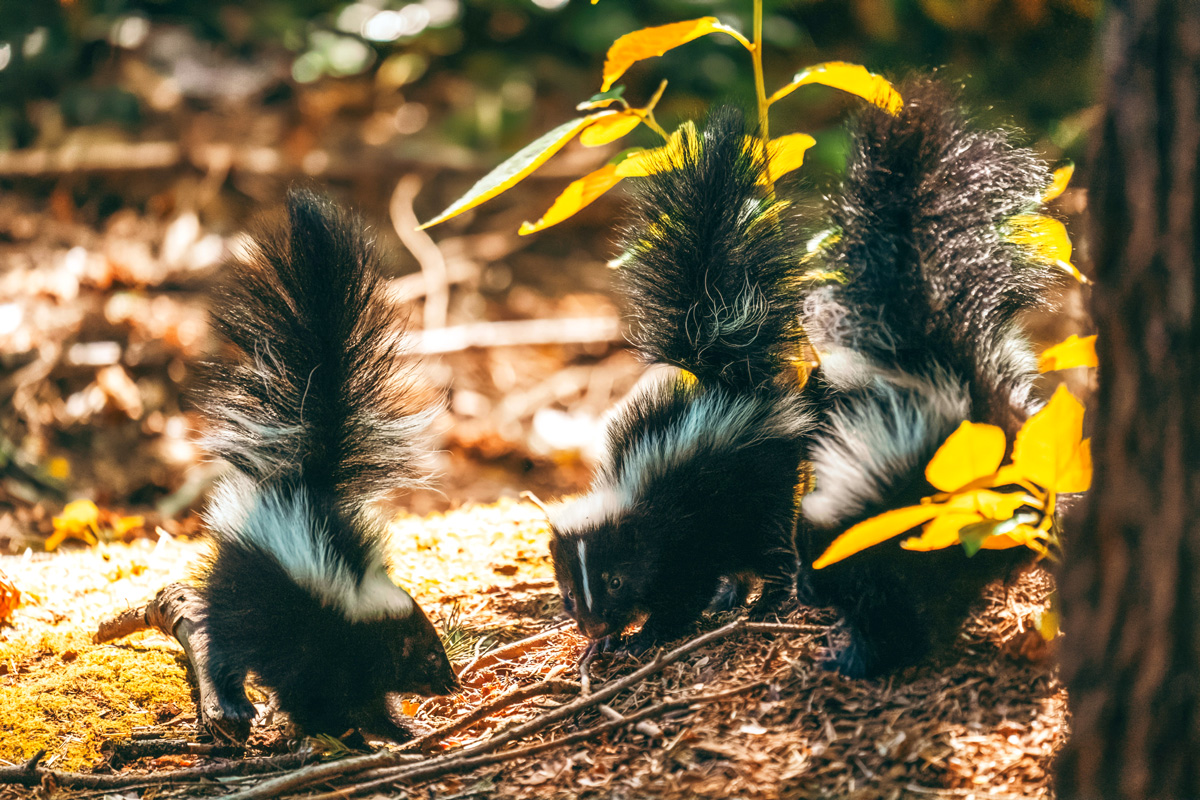

Skunks are strikingly beautiful animals famous for their not-so-beautiful odor. It’s well known that these little stinkpots produce a defensive spray that smells like rotten eggs or burnt rubber. This pungent musk is enough to ward off predators, curious dogs, or, in Pepé Le Pew’s case, potential feline lovers.
Pepé’s plight raises an interesting question. Do skunks find their own odor offensive, and do they weaponize their musk against one another? Or do they actually find the aroma pleasurable, like a fine perfume? Or are skunks just completely nose blind?
Eau du Skunk
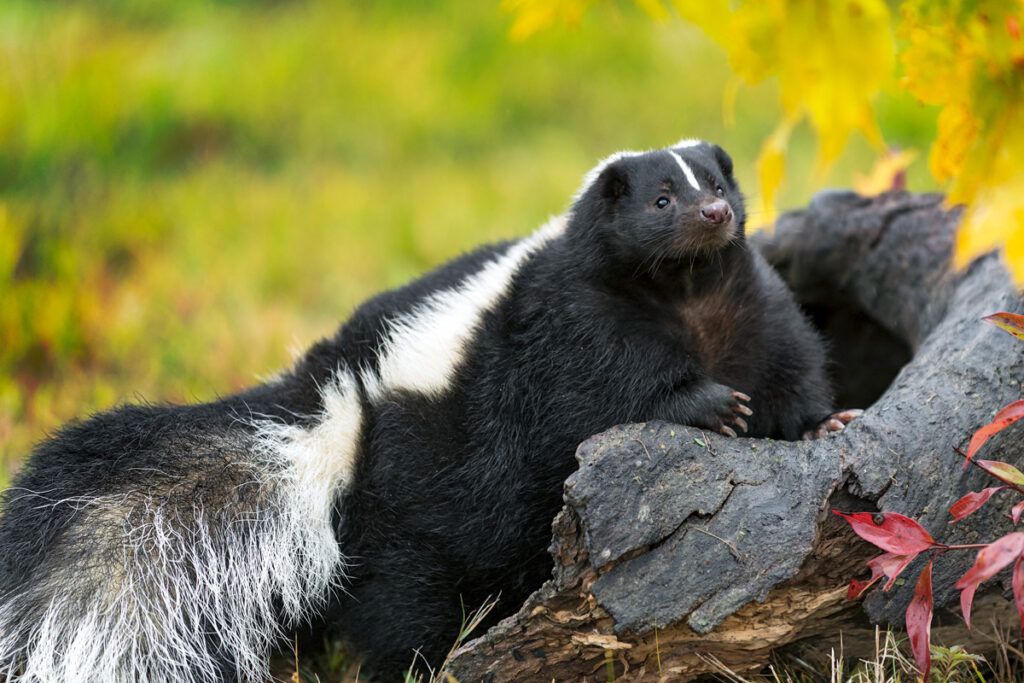
First, we should establish just how strong skunk musk can be, and how the creatures use it. Skunks are cat-sized omnivores native to North America that feed predominantly on plants, insects, and small vertebrates. Given their relatively diminutive size, skunks are vulnerable to predation from bigger animals such as wolves, coyotes, and even large owls. What they lack in size, though, they make up for in stink.
Skunks manufacture their pungent spray in anal glands, which are common in many carnivorous mammals that mark territory, including dogs and cats. If your pet (dog, not skunk) is a toy breed, you may already know this thanks to routine vet visits to have your pup’s anal glands expressed. Fortunately, your ornery chihuahua’s musk is far less offensive than Pepé Le Pew’s because of skunk musk’s secret sauce.
Though the exact chemical makeup of skunk musk varies from species to species, it always contains specialized compounds called thiols. Included in the chemical makeup of thiols is sulfur, the same element found in eggs, onions, and beer that is, well, skunked.
Skunk musk is pungent enough to cause vomiting and even temporary blindness. Plus, it’s not just about the bad smell — the musk acts similarly to pepper spray or tear gas, since the thiols cause an intense burning feeling upon physical contact with the victim’s eyes.
And it’s not just a momentary unpleasantness. Skunk musk lingers and worsens when you try to wash it off because of thioacetates, nasty compounds that release foul-smelling thiols when wet. This is why you don’t just bathe a dog with soap and water after a skunk encounter.
The good news is that cornered skunks only deploy their musk as a last resort, because it takes them up to 10 days to refill empty anal glands, and they’d rather not be defenseless if they can avoid it. If you or your dog should happen upon a skunk, it will give a warning before firing — and fortunately, it’s not a warning shot.
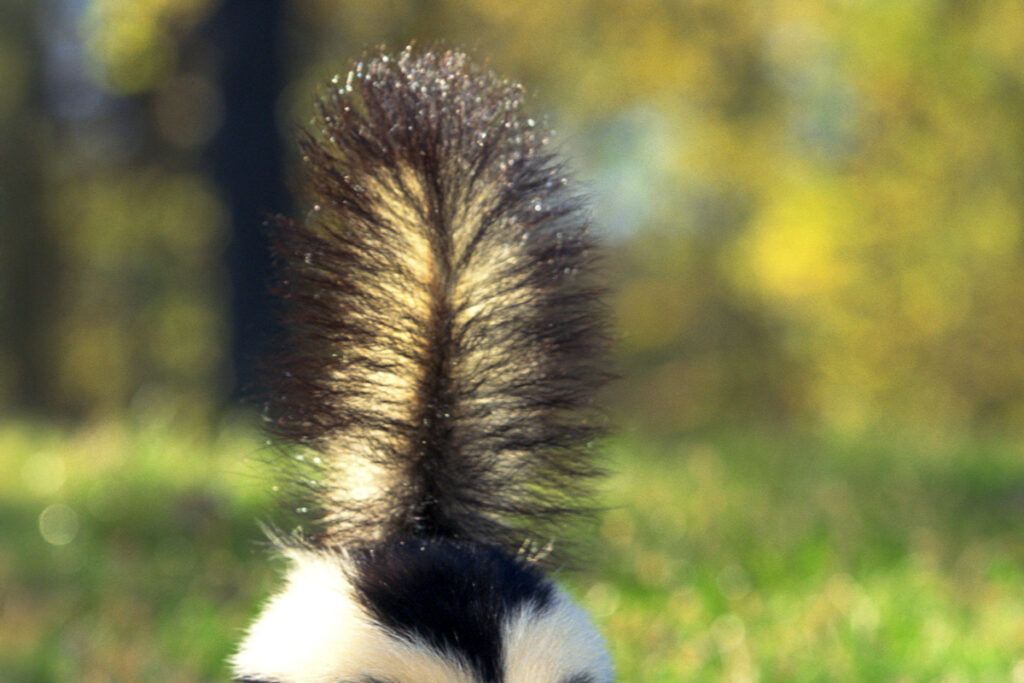
First, a skunk will stamp its feet before then raising its tail. If you haven’t gotten the hint by this point, you’re going to get sprayed (and kind of deserve it). Skunks are expert marksmen, using nipple-shaped glands to fire musk with pinpoint accuracy up to a distance of 20 feet.
So is a skunk holding its own nose (or wishing it could) as it shoots its musk? Does it scamper home, glad to be alive, but also upset that it now smells like, well, skunk? Experts are still working out a definitive answer, but evidence seems to suggest that skunks can tolerate their own stink.
Biologist Jerry Dragoo, a skunk specialist at the University of New Mexico, has observed just-sprayed skunks rubbing their faces on the ground, exactly the way a domestic dog would post-attack. But Dragoo suspects this has more to do with the burning sensation of the musk than actually being offended by the odor.
He’s observed trapped skunks completely unbothered by their own spray and suspects it comes down to nose blindness. This doesn’t mean skunks lack the capacity to smell — in fact, they have a robust sense of smell that’s stronger than ours.
Instead, skunks likely grow a tolerance to their own odor, something that humans can experience too — the more you’re exposed to a scent, the less you notice it, especially when it’s your own. This theory is also supported by the fact that skunks don’t usually use their go-to weapon on one another in a skunk-on-skunk conflict, likely because it wouldn’t do much good.
What should you do if you find yourself slimed by a skunk? No need to run to the grocery store for 30 gallons of tomato juice — it actually doesn’t do much for the smell at all. But you can use grease-cutting dish detergent, though be careful since the harsh soap isn’t meant to be used regularly on skin. Shampoo designed for oily hair can help as well, as can a mix of hydrogen peroxide, baby shampoo or dish detergent, and baking soda. The key with any of these solutions is to act as quickly as possible though.
Of course, the best approach is to avoid getting sprayed at all — when a skunk raises its tail, you should do the same: hightail it out of there.
Skunks have a strong sense of smell, but seem to tolerate their own musk. This may be due to nose blindness, meaning near-constant exposure keeps receptors in their noses from physically smelling it as strongly. Skunks rarely spray each other in the wild, but if a skunk does get affected by its own spray or that of another skunk, it will often rub its face in the ground to remove it. However, this is more likely because skunk musk has sulfur in it that can cause redness and a burning sensation in addition to its strong stink.
Short Answer