NATURE
How Do Birds Sleep Without Falling off the Branch?

Do you think you’d get a good night’s sleep if you were standing the entire night? Do you think you could get any sleep at all? And what if you weren’t just standing, but clinging to a wire no thicker than a pencil?
It sounds nearly impossible, but some bird species do it all the time. That’s because wings aren’t the only difference between a bird’s anatomy and yours — their legs are built differently, too. Here’s how that helps them sleep soundly while perched on a branch or wire.
Birds Need to Get a Grip
Perching birds (the technical word is passerines) comprise familiar species such as cardinals, crows, blackbirds, sparrows and wrens. In addition to being songbirds, as most of them sing to attract a mate or to mark territory, they have four toes — three going forward and one going backward, which helps them perch on branches.
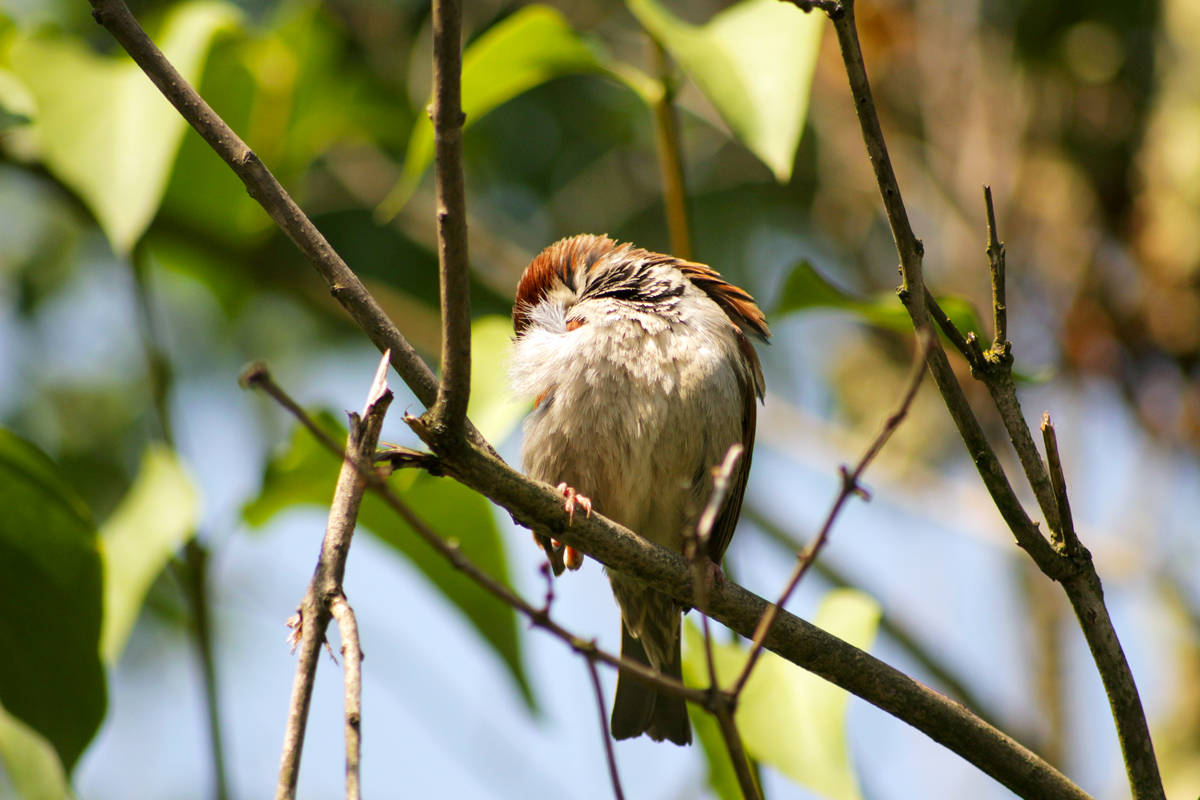
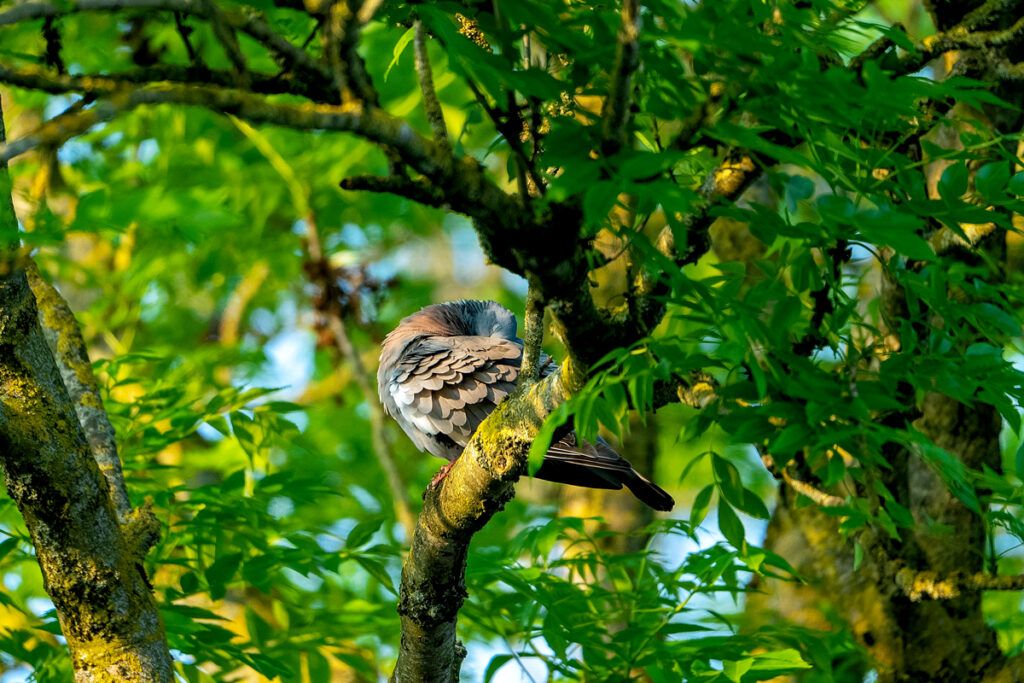
Before settling down for the night (or sometimes in the day, depending on when the species is normally awake), the perching bird will find a branch or window ledge, turn its head back, tuck one foot against its belly, fluff up its feathers and catch 40 winks.
When the bird squats on its foot, the muscles in the leg will force the tendons (tissue that connects muscles to bone) to tighten. This causes the toes to pull inward, giving a tight grip around the branch and ensuring the bird doesn’t fall off. It’s not unlike using a claw machine at the arcade to grasp and hold a prize.
It’s important to note that this behavior is all automatic. The bird isn’t exerting any mental or physical effort to stay upright. Gravity and body weight do the trick. Plus, fluffing up the feathers and tucking up the leg help it to stay warm at night too.
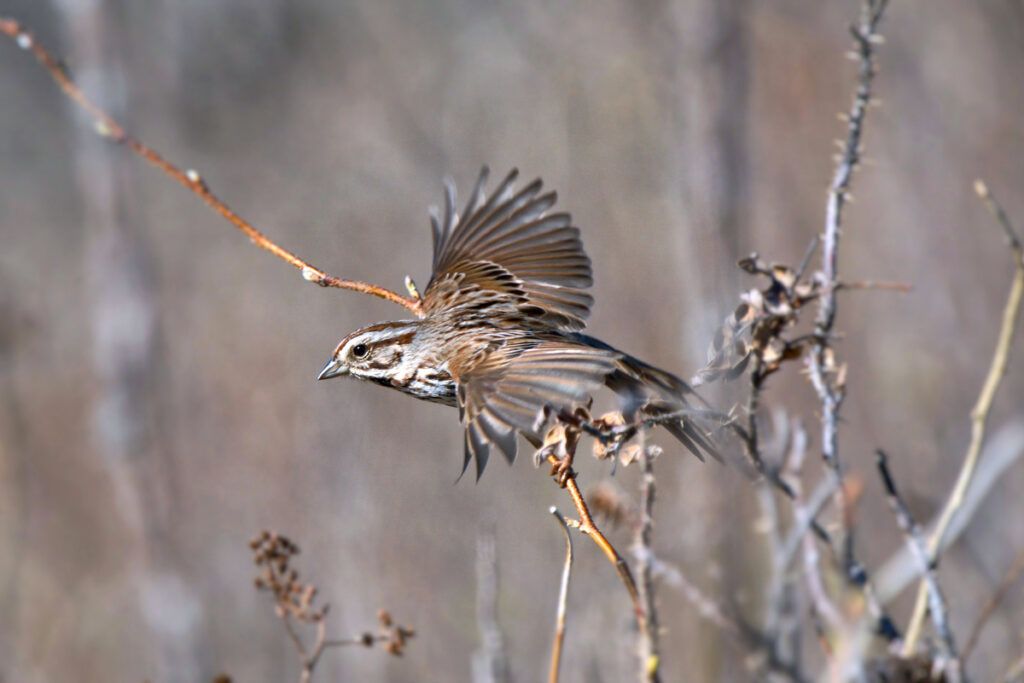
Once the bird is ready to fly off, it stands by raising its body off its feet, which releases the toes. When it does awaken, it’s likely not as groggy as you are first thing in the morning, because birds don’t sleep very deeply.
They tend to sleep in small segments, since they have predators, weather and other dangers to worry about. In fact, some species can put half their brain to sleep while keeping the other half awake.
This is called unihemispheric slow-wave sleep. The eye that corresponds to the half of the brain that is in deep sleep will be closed while the other eye stays open and the other half of the brain is alert, almost as if the sleeping bird is using half its brain as a protective security camera. (This ability also explains how birds are able to sleep when flying long distances while migrating.)
Not all birds sleep on branches. For instance, woodpeckers will tap out a hole in a tree trunk or large limb (called a roost cavity) where they can settle in and keep warm. (All that pecking isn’t just them having a jam session.) Chimney swifts sleep clinging to the insides of chimneys.
Ducks don’t do a lot of flying and will sleep on the water’s edge with one foot tucked up. Just as some birds evolved to sleep up high for safety, others were born to lounge in the pool.
Perching birds are able to sleep on branches thanks to muscles in their legs that force tendons to tighten when they squat. This causes the toes to pull inward, so they securely grip the branch, ensuring the birds don’t fall off. To protect themselves from predators and other dangers, some birds also keep half their brain alert as they rest, literally sleeping with one eye open.
Short Answer