HEALTH
Does Turkey Really Make You Sleepy?
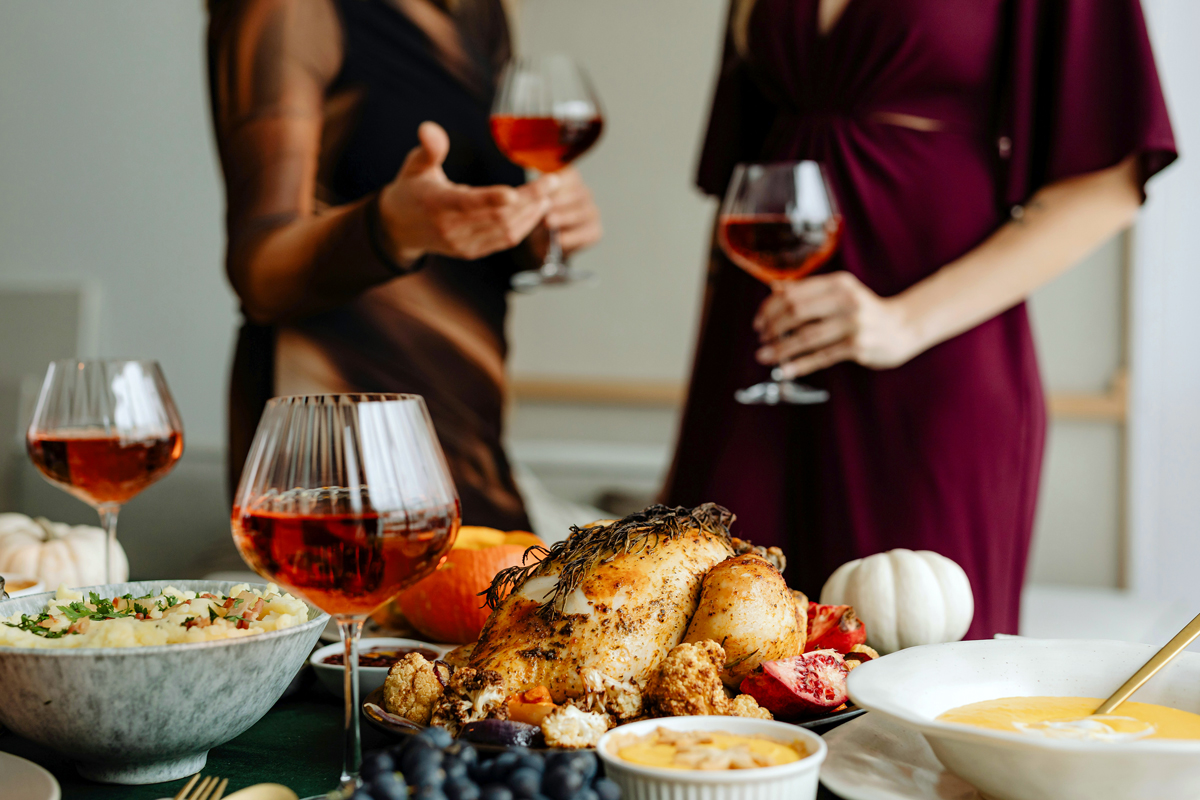

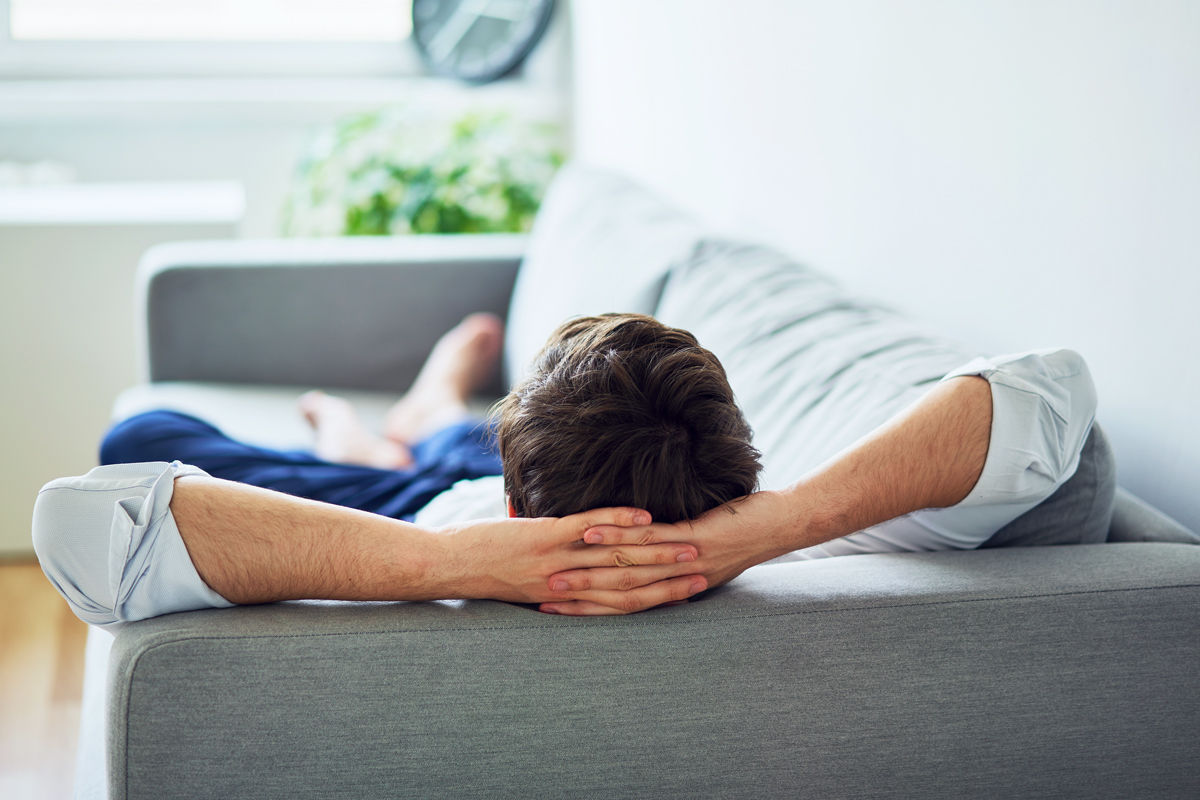
The Thanksgiving dishes have barely been cleaned up when the couch starts looking irresistible. You settle in to watch TV, loosen your waistband, and find yourself struggling to keep your eyes open. Inevitably, someone blames the turkey. The usual explanation involves tryptophan, a substance that’s found in turkey and supposedly makes you sleepy.
It sounds convincing enough, but science says otherwise. Something is causing your post-feast snooze — but it isn’t necessarily the turkey.
Why Turkey Gets the Blame
This much is true: Tryptophan can make you drowsy. It’s also a building block of protein and an essential amino acid that humans need to survive. But your body can’t manufacture tryptophan on its own — meaning you must get it from food.
Your body uses tryptophan to produce serotonin, a chemical messenger involved in mood and sleep, as well as melatonin, a hormone that helps regulate your sleep-wake cycle. This double whammy is why the chemical can make your eyes heavy.
But that doesn’t mean a second helping of dark meat will knock you right out. While it’s definitely true that turkey supplies tryptophan, so do chicken, fish, cheese, eggs, soybeans, and various seeds. There’s nothing uniquely sleep-inducing about turkey’s supply. In fact, salmon contains a similar amount, and you don’t see anyone blaming that for their nap.
It’s also worth noting that sending tryptophan to your stomach isn’t the same as sending it to your brain. To cross the blood-brain barrier, tryptophan must share a transport system with several other amino acids. A helping of turkey delivers those competitors, too, and they tend to crowd out the tryptophan. (It turns out you’re not the only one getting stuck in Thanksgiving Day traffic.)
For these reasons, eating more protein doesn’t simply send a rush of tryptophan into the brain and “switch on” sudden sleepiness.
You may also have heard that sides rich in carbohydrates (such as all that stuffing and sweet potatoes) are behind your need to nap, in part by triggering a release of insulin, which helps tryptophan enter the brain. But the precise relationship between what you eat and how sleepy you feel can’t be reduced to blaming a single nutrient.
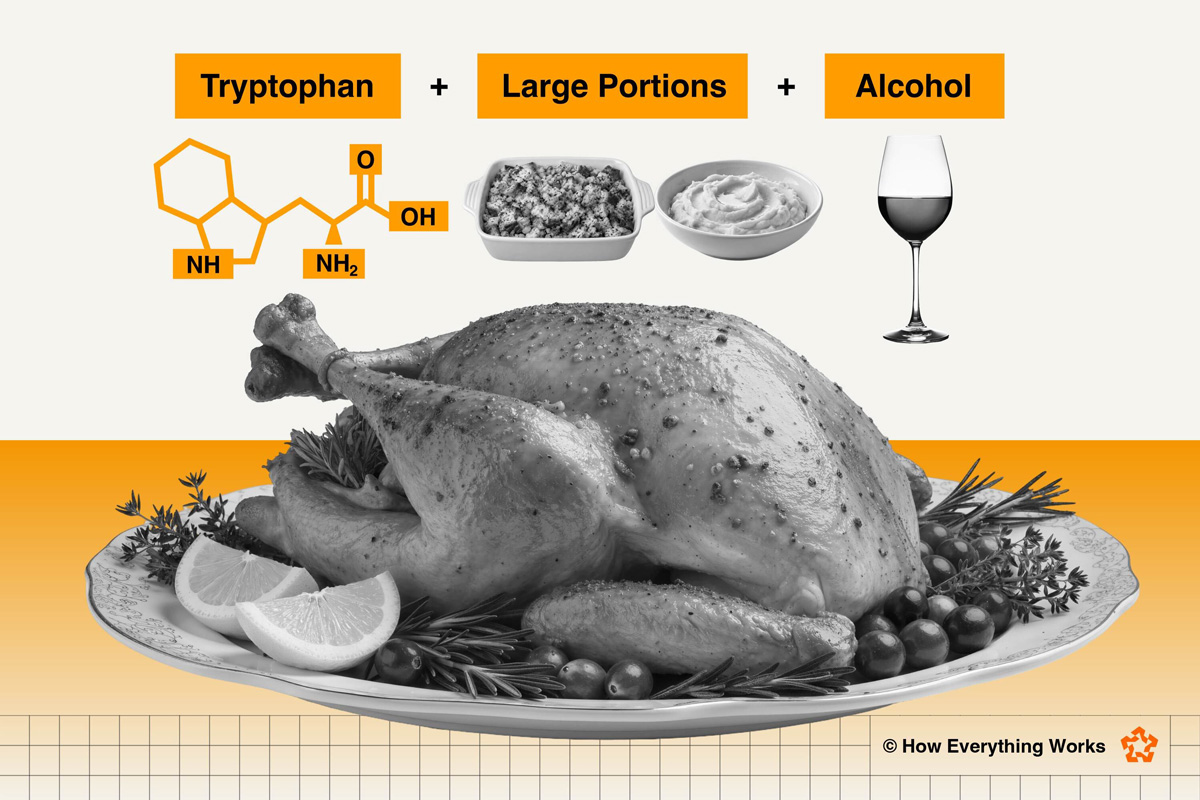
So why the heavy eyelids? It’s probably more about the meal as a whole, which may include heavier-than-average portion sizes, possibly combined with alcohol. In general, you’re more likely to be sleepy after eating, whether it’s a holiday dinner or not.
A 2011 study compared light and heavy lunches in men who had slept only five hours the previous night (significantly less than the approximately eight hours of shut-eye most adults should get). The larger lunch worsened signs of sleepiness during a simulated afternoon drive, suggesting that a hefty meal can amplify existing drowsiness if you’re already sleep-deprived.
Any alcohol accompanying the feast can add to the effect, and there are plenty of reasons you might not get enough rest the night before Thanksgiving, whether from traveling or staying up late baking pies.
Timing matters, too, because many folks eat their Thanksgiving dinner on the early side. Your body’s internal daily rhythm tends to make you sleepier in the afternoon, whether or not you’ve just eaten. Put a substantial meal and perhaps a glass of wine on top of that natural lull, and you’ve got a recipe for snooze pie a la snore.
As you can see, the real explanation is fairly complex and nuanced. It may be easier for the turkey to take the blame. Perhaps it’s time we gave it a pardon?
Turkey contains tryptophan, which the body uses to make chemicals involved in sleep, but a normal serving isn’t likely to make you drowsy. However, a large meal, holiday-related fatigue, a natural afternoon dip in your energy, and possibly a glass of wine are more likely explanations for that Thanksgiving snooze.
Short Answer