ENGINEERING
What Keeps Deep Tunnels from Collapsing?
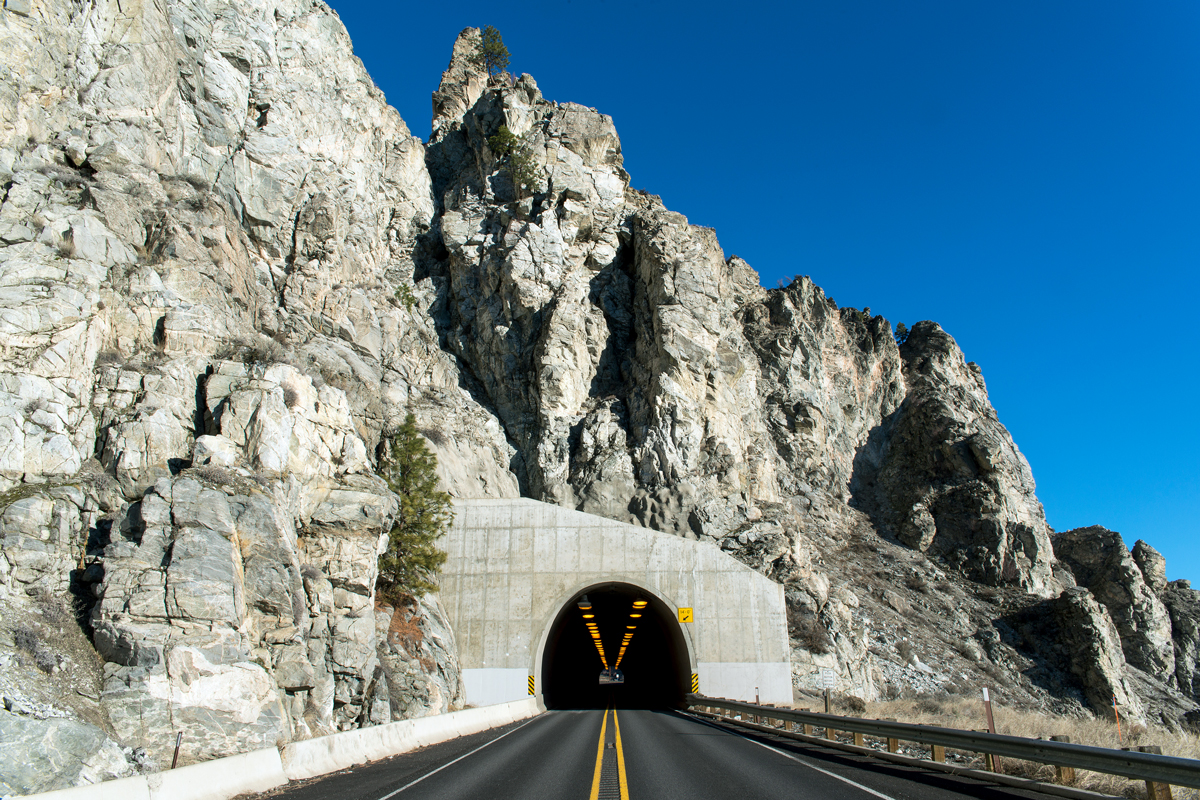

Driving through a tunnel is one of those totally mundane yet staggeringly awesome everyday experiences. What do you mean we’re just cruising through this giant mountain?! Some underground tunnels, which are constructed and maintained somewhat differently than undersea tunnels, run more than a mile beneath the surface. That’s a lot of rock to have hanging over your commute.
So what’s keeping all that rock from coming down? Concrete is strong, but it’s not that strong. Instead, engineers get help — a lot of help — from something else: the earth itself. Here’s how.
Bearing the Weight
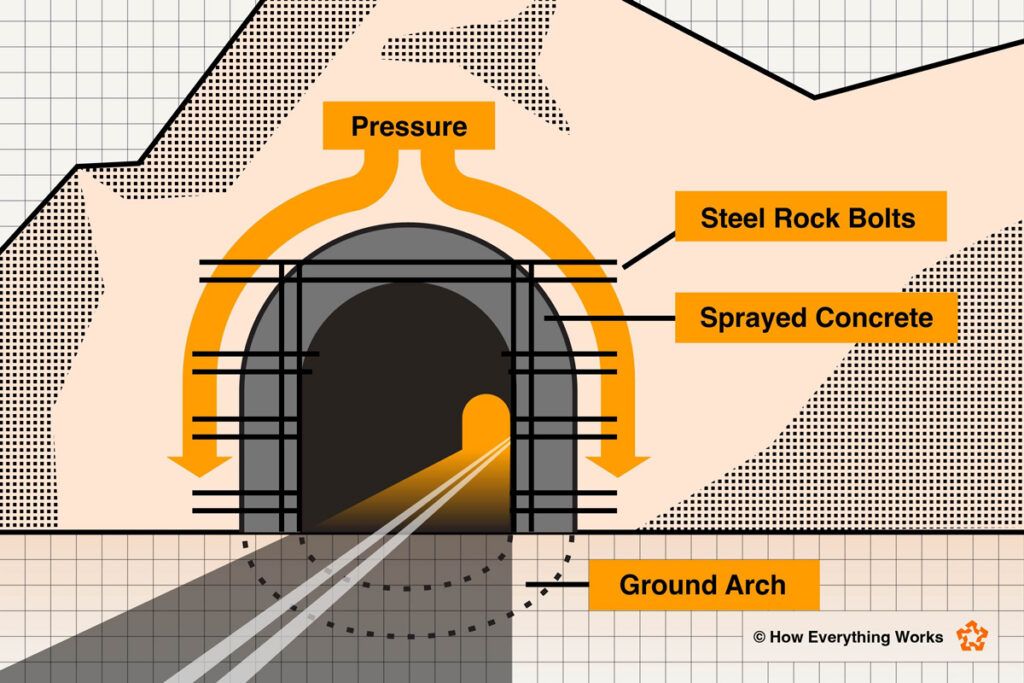
Deep underground, rock is squeezed from every direction by the weight of everything around it — kind of like a commuter on a rush-hour train. Before an underground tunnel exists, that pressure passes evenly through solid stone. But dig a hole, and all that force loses its travel route (it can’t move through empty space).
Instead, pressure detours around the opening, the way a stream flows around a boulder. That rerouted stress concentrates in the ring of rock surrounding the tunnel, compressing it into what engineers call a ground arch.
Conveniently, rock is excellent at being squeezed. (Being stretched or pulled apart is more of a weak spot.) As long as that circle of rock stays intact, the mountain’s weight flows around the tunnel instead of bearing down on its ceiling (and anyone driving underneath that ceiling).
A Well-Rounded Approach
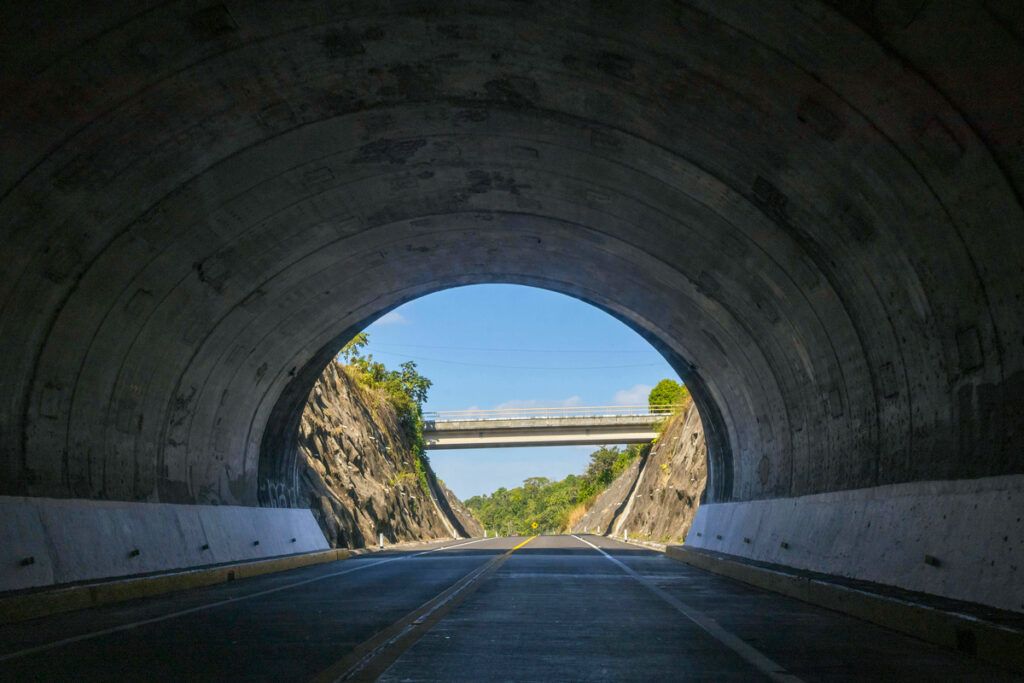
This is also why most tunnels are round or arched. A curved shape spreads pressure evenly and keeps the surrounding rock in compression. It’s the same trick that’s kept Roman aqueducts standing for about 2,000 years, and the reason airplane windows are always round. A flat ceiling of a square or rectangular tunnel would sag in the middle, like an overloaded bookshelf.
That’s not to say digging a rounded tunnel through a mountain is foolproof. The weak link is the rock right at the tunnel’s walls and ceiling, which gets cracked and loosened as the space is cleared. So as crews dig, they drill in long steel rods called rock bolts that work like oversized staples, pinning the cracked outer layer to deeper, solid rock. Then they spray on concrete to seal everything in place.
The whole strategy is less “hold up the mountain” and more “help the mountain hold itself up.” Crews even install sensors to watch for shifting rock and add support only where needed.
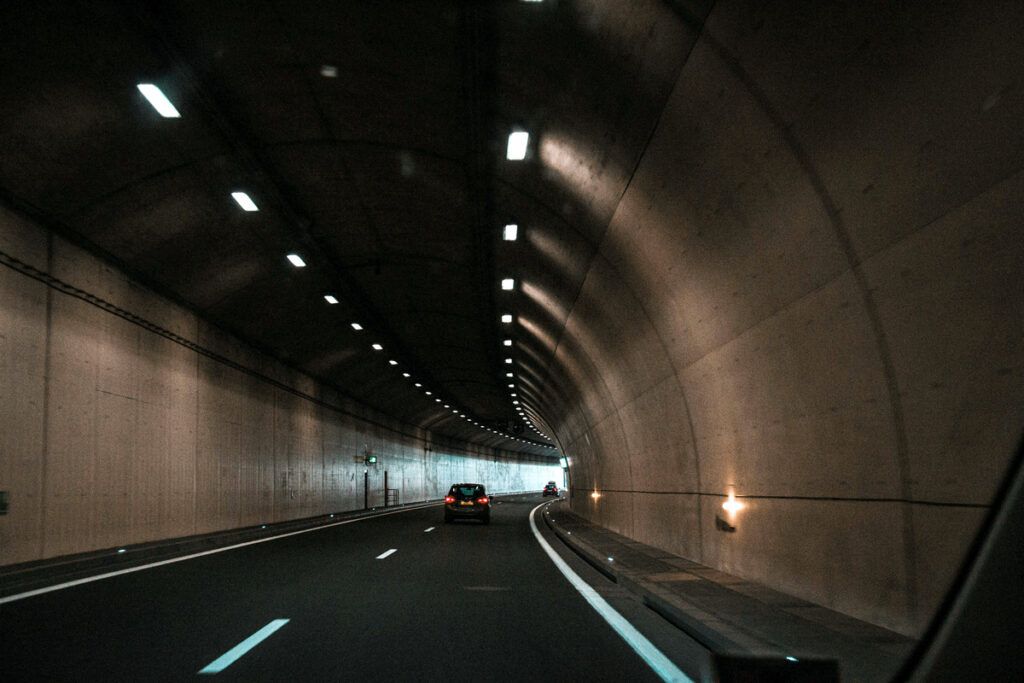
Going deeper does add some drama. More depth means more pressure from the weight of all that additional rock overhead. In extreme cases, hard rock can burst off the walls while softer rock slowly squeezes inward. This phenomenon can be countered with flexible supports designed to give a little without failing.
So the next time you’re driving through a mountain, don’t just marvel at the incredible human engineering — show some appreciation for the earth itself. That stone has been holding itself up this whole time — and the concrete overhead is more of a trusty sidekick than the main character.
When a tunnel is dug through a mountain, the pressure from the surrounding rock doesn’t simply press down on the opening. It flows around it instead, squeezing the nearby rock into a natural load-bearing ring. Rounded tunnel shapes help spread that pressure evenly, while steel rock bolts and sprayed concrete reinforce the cracked rock at the surface so the ring stays intact. Deeper tunnels deal with more pressure, so more flexible supports with a little give are also added. Supports are just that — support — as the rock itself is doing the real heavy lifting.
Short Answer