HEALTH
8 Ways Your Body Changes When You Fly

Air travel can be a real hassle these days. You pay exorbitant fees for frequent delays, ever-shrinking legroom, and fewer, if any, free snacks — not to mention battling your neighbor for the armrest. On top of all that, flying can put your body through the wringer due to pressure changes and other environmental factors, affecting everything from your taste buds down to your very DNA. Here are some surprising physiological changes that happen to your body when you fly.
Your Taste Buds Go Haywire
Ever notice how food often tastes different on planes? If a particularly nice flight attendant lets you grab pretzels and cookies, you may find both to taste a bit bland. Scientists have confirmed that, for most of us, our taste buds’ ability to detect salt and sweetness is suppressed during air travel.
On the flip side, savory umami flavors — such as frequent flyers’ beloved tomato juice — are accentuated. Airlines aren’t skimping on sugar, though. It’s not the actual airplane food, but the airplane noise that affects your taste buds.
In 2015, Japanese researchers discovered that noisy environments alter our sense of taste, and the loud 85-decibel ecosystem of an airliner boosts savory flavors. So remember that if you use noise-canceling headphones on your next flight, you may also be using taste-cancelling headphones.
Your Feet Swell
The longer the flight, the tighter your shoes feel. Foot swelling is one of the most common side effects of flying, and has more to do with being sedentary than with the flight itself. Because of gravity, sitting in a cramped seat with your feet planted on the floor for long stretches causes blood to pool in your leg veins. Over time, fluid seeps from the blood into surrounding tissues, causing swelling.
This would happen whether you sat upright without moving all day on an airplane or in your own home. Usually, this is harmless, but certain people with preexisting health conditions may be at risk of complications such as deep vein thrombosis. That’s why it’s a good idea to stretch and walk up and down the aisle every so often. You should also consider wearing a well-made pair of compression socks for flights longer than four hours, as they help prevent pooling by applying a bit of pressure to your calves.
Your Ears Pop
You almost certainly know this one. The pilot says, “Prepare for takeoff,” over the intercom. The flight attendants take their seats. Your stomach sinks as the plane takes off, and the next thing you know, your hearing becomes muffled and your ears start popping.
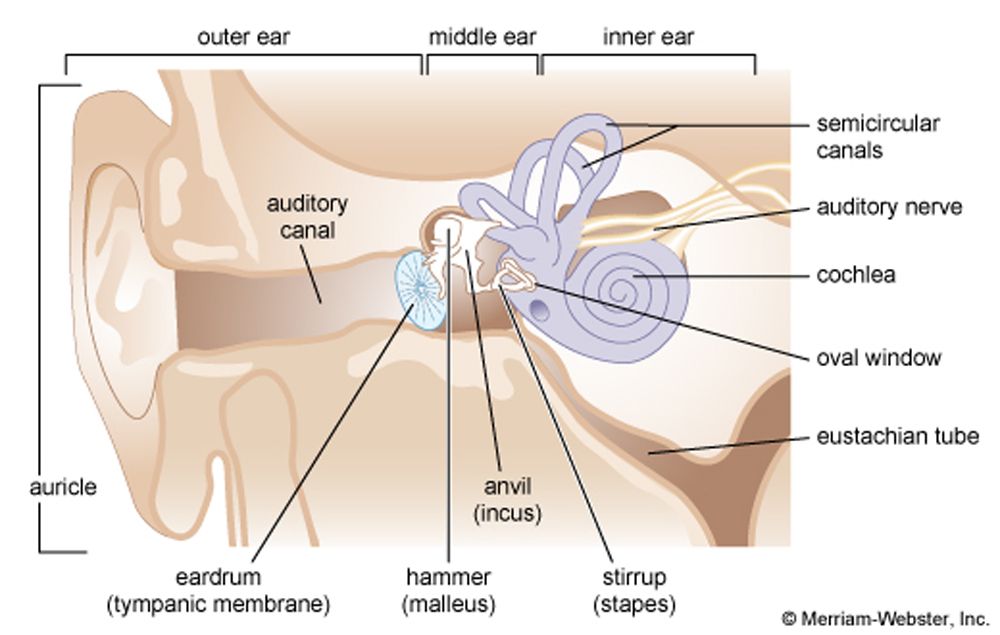
Airplane ear, or ear barotrauma, occurs when air pressure inside the cabin gradually decreases as the plane gains altitude. Air trapped inside your inner ear exerts pressure on your eardrums, pushing them outward, which can be very uncomfortable. Fortunately, your body can actively try to relieve this discomfort all on its own — this is why your ears pop on airplanes. By releasing air via the Eustachian tubes, your body balances the pressure inside your ear, not unlike “burping” a Tupperware lid.
You Get Gassy
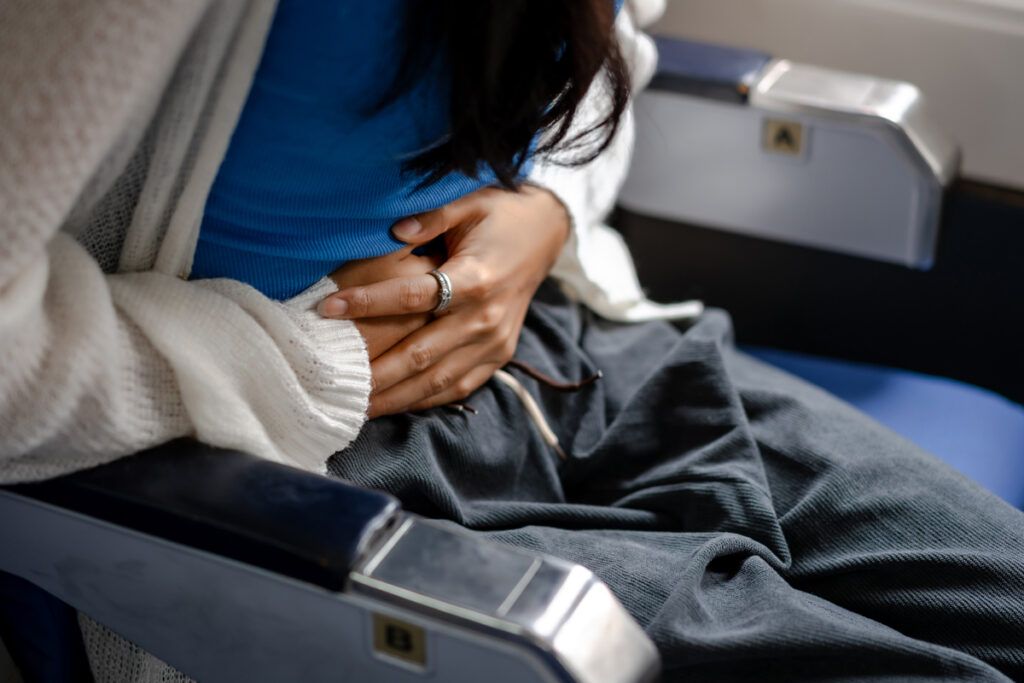
No matter how short the flight, air travel probably makes you feel a little uncomfortable, and not just because of your coughing seatmate. Flying creates bloating — and even flatulence. The decreased air pressure that makes your ears pop also causes the gas in your digestive tract to expand. Couple that with increased water retention that also often occurs during travel, and you’ve got a recipe for mile-high toots.
You Get Dehydrated
It may feel as though no matter how many cups of water you down during your flight, you feel parched when you land. This happens because airplane cabins are extremely dry, with most averaging just 5-12% humidity. To put that in perspective, the Sahara Desert averages around 25% humidity, meaning your airbus is drier than the largest desert on Earth.
The low humidity is caused by high-altitude air — roughly 50% of the air circulating in a cabin is drawn from the outside. At 35,000 feet, water vapor is scarce and the air is bone dry. This doesn’t just make you thirsty, but will also dry out your skin, which is why you may find yourself reaching for the lotion when you land.
Your Blood Oxygen Levels Drop
When you think of hypoxia, or oxygen deprivation, you probably imagine mountaineers scaling Everest. But altitude sickness can happen during air travel, too, as the air pressure in a plane cabin is equivalent to what you’d experience at an altitude of around 7,000 feet.
This can drop your blood oxygen levels and, in extreme cases, cause hypoxia. It’s rare, but people with preexisting conditions, such as heart or lung trouble, are more vulnerable. Then there are also those little bottles of free booze some airlines hand out: A 2024 study found that the blood oxygen level of people who had consumed alcohol and slept in lower air pressure environments dropped to as low as 85% — well below the ideal range of 95-100%.
You Get Jet Lag
If you ever travel eastward on a transpacific flight, you could theoretically depart Asia on a Monday afternoon and land in North America the previous Sunday morning. This faux time travel happens when you cross the international date line, and it’s the perfect recipe for jet lag. Jet lag is more than being tired or even confused because your watch is wrong — it’s a real biological condition.
A California-bound flight from Japan is an extreme case, but jet lag can get you on much shorter trips, too — traversing just three time zones will throw your circadian rhythm off. Your body relies on your internal clock more than you might think, and jet lag can affect the way your cells function or even how your genes are expressed, disrupting your immune system and other bodily functions. Even the way you process certain medications can change while you’re jet-lagged.
Thankfully, there are many tricks for combating this, ranging from adjusting sleep patterns in advance to avoiding alcohol and sticking to small meals during travel.
You’re Dosed With Cosmic Radiation
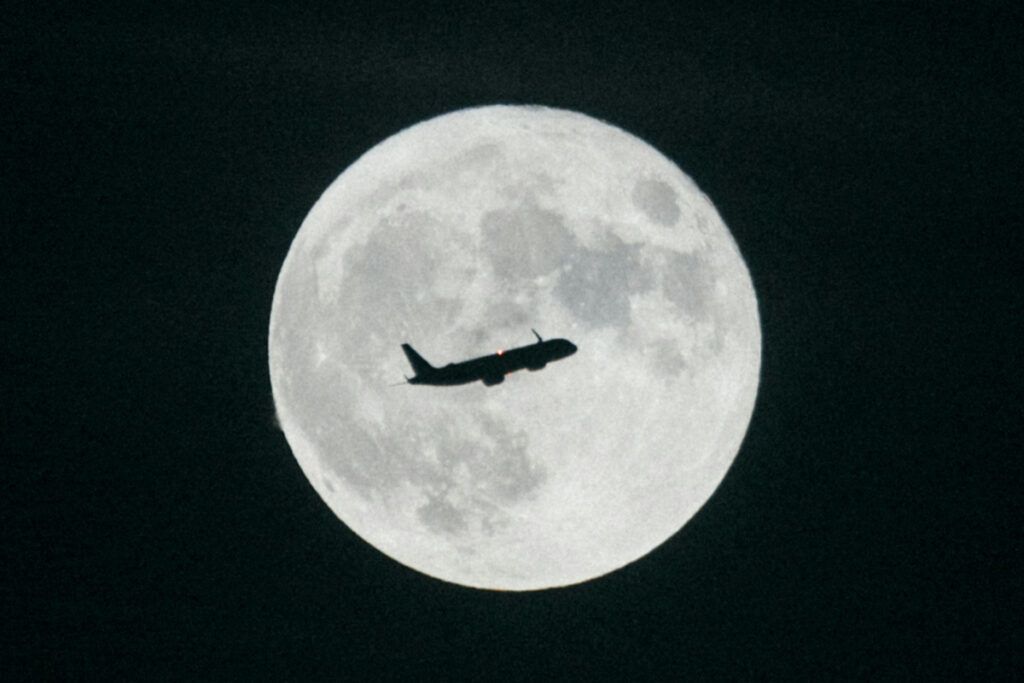
Bet you didn’t have cosmic radiation exposure on your bingo card. Just as the legendary Icarus discovered, flying closer to the sun does come at a cost (in addition to those outrageous airfares). Every second of every day, Earth is bombarded by solar radiation from the sun and cosmic radiation from the rest of the universe. Fortunately for us, our planet’s atmosphere and magnetic field keep that radiation from doing much damage to us on the surface (outside of the occasional sunburn, perhaps.)
But the atmosphere is much thinner at high altitudes, exposing your body to a much greater amount of cosmic radiation. The length and altitude of a given flight determine the dose of radiation you can expect to receive. Thankfully, even the highest doses are still pretty low. For example, two transcontinental flights across the U.S. expose you to the equivalent of radiation from a single chest X-ray.
So, no need to cancel that trip to Greece — unless you’re planning on flying with wax wings, that is.