NATURE
Why Do Leaves Fall Every Autumn?
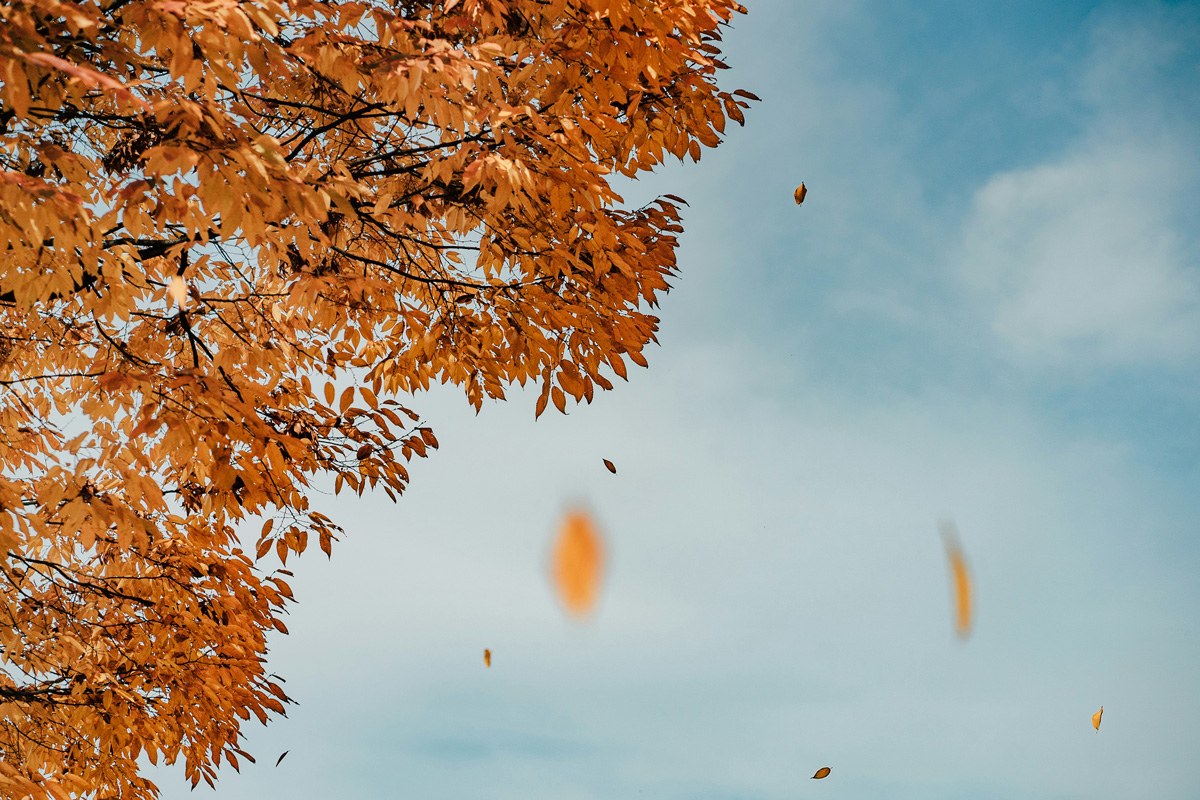

Every autumn, many deciduous trees perform what looks like an act of botanical self-sabotage: They discard the very leaves they spent all spring growing. This happens year in and year out like clockwork, so much so that English speakers would refer to autumn as “the fall of the leaf,” which eventually was shortened to simply “fall.”
But why would a tree spend so much time developing its leaves only to let them go and start all over again the next year, rather than just keep the foliage it has? In other words, why are some trees evergreen while others are sometimes-green?
Leaves of Burden
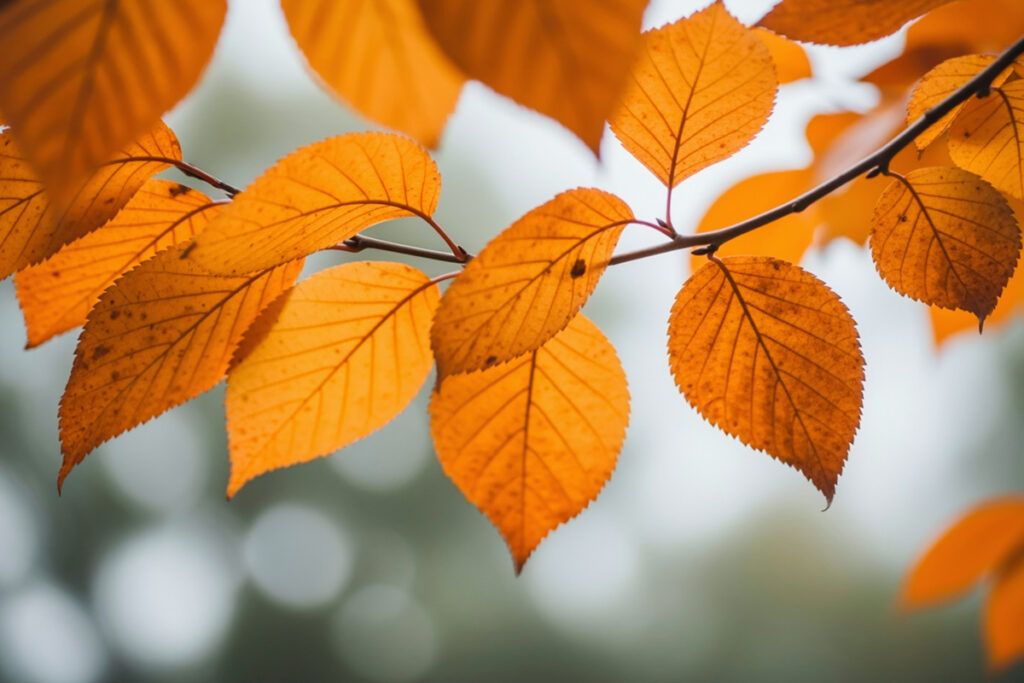
As the weather turns cold, the relationship between a deciduous tree (not all, but most) and its leaves has run its course. That once-indispensable foliage becomes more of a liability than an asset, and the tree is better off letting it go. The breakup, however, is a surprisingly orderly affair.
Humans may be embracing solar power more these days, but trees have been using it for 400 million years. Leaves are excellent solar panels. Their broad, thin surfaces capture sunlight, and their chlorophyll-laden cells use that energy to make sugars through photosynthesis.
Chlorophyll absorbs blue light from the sun (as well as other wavelengths) and reflects back the green it doesn’t use. That’s why plants are verdant and lush in the warmer seasons. But a leaf optimized to soak up the sunny days of spring and summer isn’t necessarily built to survive winter.
In colder climates, those thin leaves are vulnerable to freezing and other winter stresses. Cold temperatures and shorter days also slow photosynthesis, while frozen soil can make it difficult for a tree to replace water lost through its exhaling leaves. Plus, leaves are fragile, and by autumn, many are already showing their age after a long growing season — battered by insects, disease, wind, and other hazards.
Keeping thousands of increasingly unproductive leaves attached all winter simply isn’t worth the resources. Leaves can also become a structural liability. A broad canopy catches wind, increasing the strain on branches during storms. Add a load of wet, heavy snow to all that leafy surface area and the risk of broken branches rises. So the tree cuts its losses. Literally.
How a Tree Lets Go
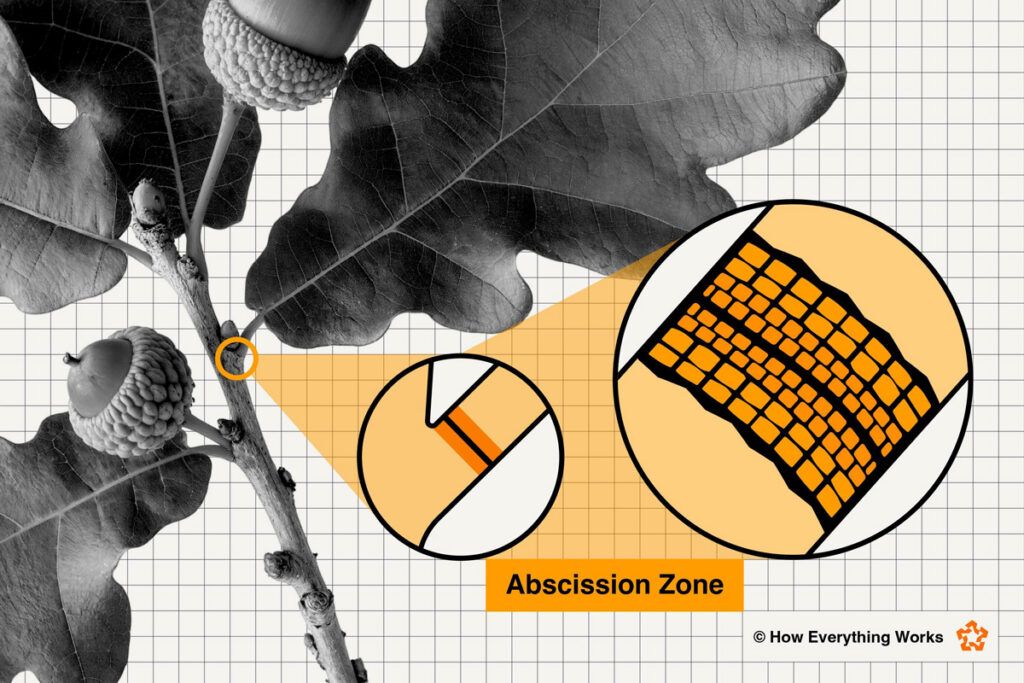
As autumn days shorten and temperatures fall, leaves are eased into their separation from the tree by a gentle breakup known as abscission. The familiar blaze of fall color that has tourists flocking to New England every year is a sign that this process is underway and that green chlorophyll is beginning to break down. Yellow and orange carotenoid pigments, now free of chlorophyll’s mask, shine through in many species. The leaves of other trees also produce red or purple anthocyanin pigments at this time: One last burst of beauty before the fall.
Meanwhile, the tree begins withdrawing its support. The vessels that carry water into and sugars away from each leaf are closed off. A specialized layer of cells, known as the abscission layer, develops where the leaf stalk meets the twig. This scar-like formation ensures that the tree isn’t left with thousands of tiny open wounds after the separation.
Eventually, there’s little holding leaf and tree together, and gravity or a gust of wind finishes the job, one by one. Free of these burdens, the leafless tree settles into dormancy and conserves its resources through winter, not unlike a hibernating bear.
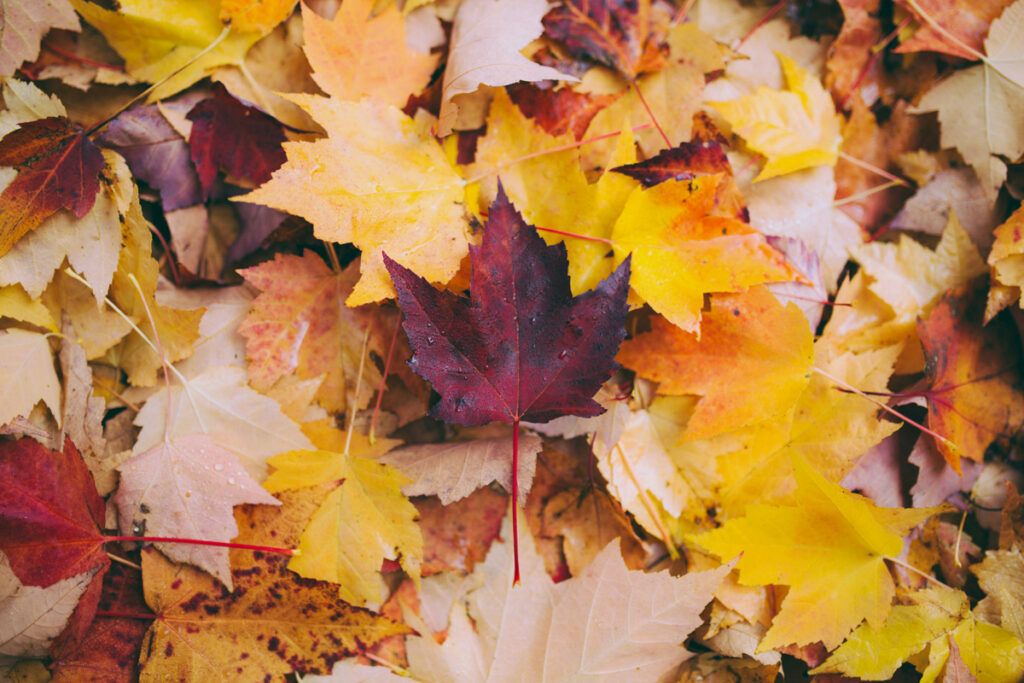
But the relationship isn’t entirely over. Once on the ground, fallen leaves become leaf litter, an important part of the forest ecosystem. As they decompose, nutrients locked in their tissues are returned to the soil, helping support future plant growth (including that of their ex).
The layer of leaves also shelters insects and other invertebrates and provides cover and insulation for animals such as frogs and salamanders. So while the tree may be ready to move on, its former leaves still have plenty to contribute — not just to its previous partner, but to other nearby life as well.
Short Answer
Deciduous trees shed their leaves before winter because broad, thin leaves are poorly suited to cold conditions and can increase the risk of damage from wind and snow. Darker days also slow photosynthesis, making leaves more of a liability than an asset to the tree. As days shorten and temperatures drop, trees begin abscission, a carefully controlled process that seals off each leaf before letting it go. After they fall, leaves still provide nutrients as they decompose into the surrounding soil.
 CULTURE




 HEALTH




 TECHNOLOGY








 SCIENCE

















 ENGINEERING